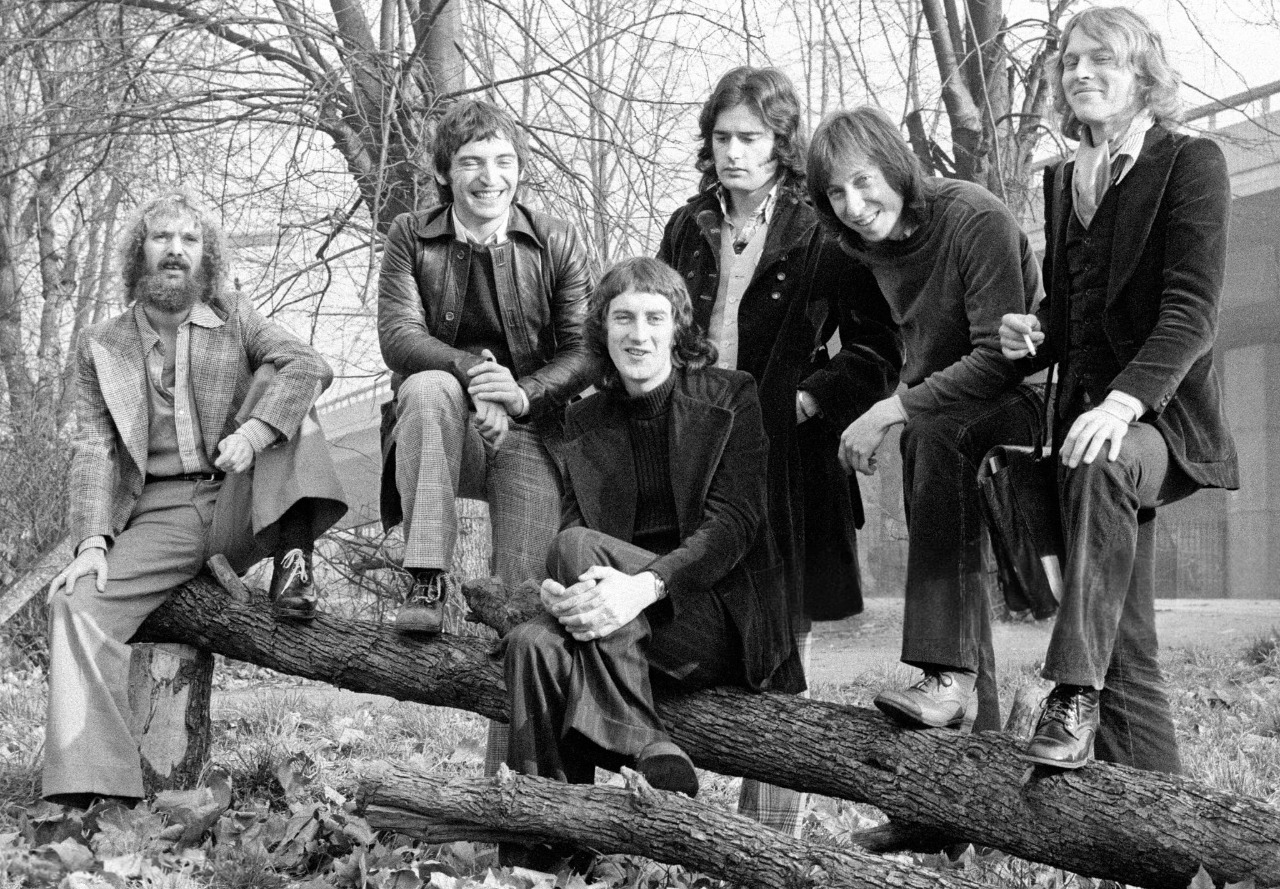
The Incredible String Band began their journey performing in a small Edinburgh pub, yet within a decade, they had evolved into one of the seminal outfits of the 1960s counterculture. Their music rapidly transcended the boundaries of traditional folk, absorbing psychedelia, Eastern motifs, and poetic experimentation. By fusing local folk customs with a global cultural outlook, the band became a truly unique phenomenon of their time. Read more on edinburgh-trend.
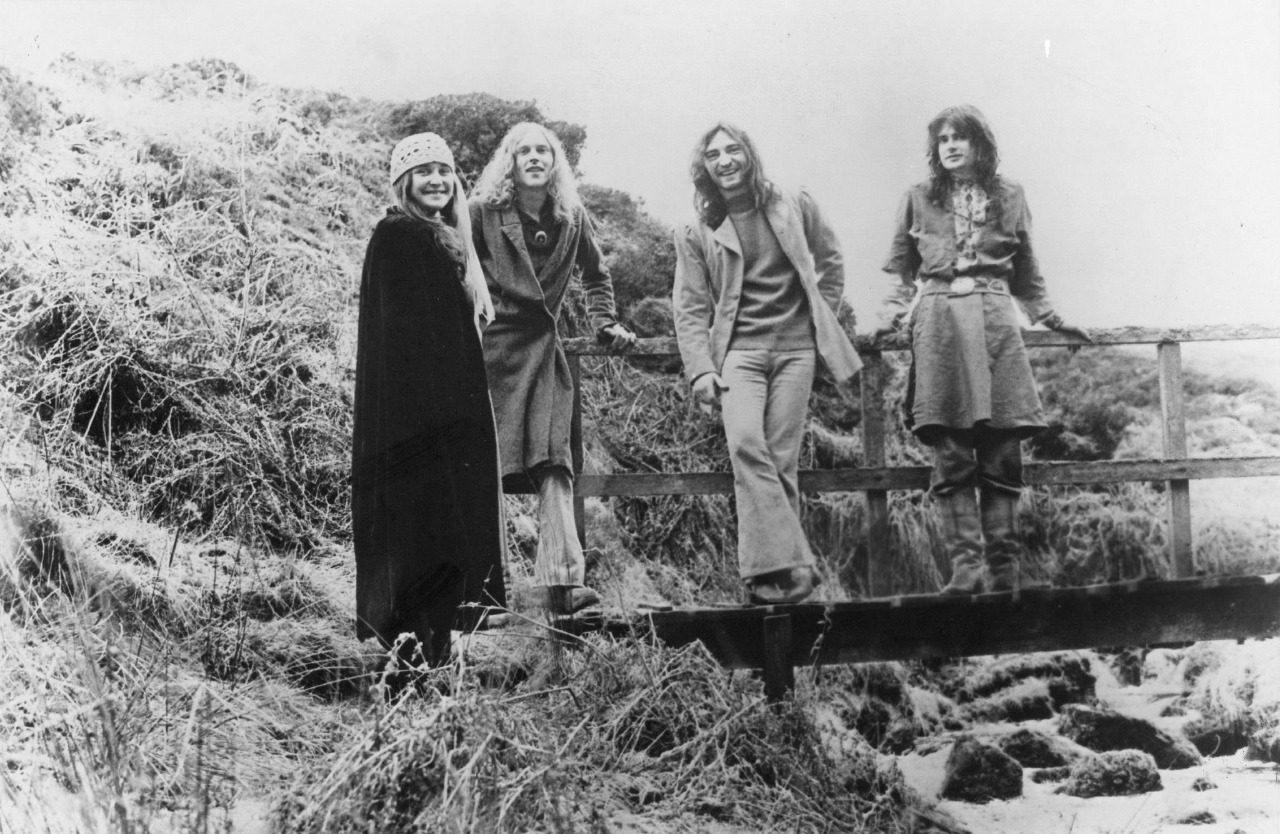
Formation and Rise to Fame
In 1963, singer and guitarist Robin Williamson teamed up with banjo player Clive Palmer to form a duo, effectively turning the Crown Bar on Edinburgh’s Lothian Street into their resident stage. Their sound ventured far beyond the standard folklore canon. Alongside traditional folk songs, the pair wove elements of bluegrass, jug band music, and motifs from Bulgaria and Morocco into their repertoire. Eventually, Decca Records invited them to contribute to a festival album recorded during the 1963 Edinburgh Festival.
It was here that this unusual sound first caught the ear of American producer Joe Boyd, who had arrived in Scotland scouting for new talent. By this time, the Williamson and Palmer duo had expanded into a trio with the addition of Mike Heron, a guitarist from a local rock band. This new lineup quickly forged its own identity, borrowing their name from the club that hosted them: The Incredible String Band (ISB). Williamson and Heron’s original material made such a profound impression on Boyd that he decided to sign them immediately. This marked the beginning of the first major chapter in ISB’s history, culminating in their self-titled debut album, The Incredible String Band, recorded in May 1966. All three members sang and played guitar, with Palmer adding banjo and kazoo, while Williamson contributed mandolin, tin whistle, and fiddle.
However, this lineup was short-lived. Palmer departed The Incredible String Band to embark on a lengthy journey to Afghanistan and subsequently India. Following his exit, the collective temporarily disbanded. It wasn’t until a year later that Williamson and Heron revived their collaboration as a duo. Williamson’s own travels to the East, particularly Morocco, significantly influenced the group’s new direction: the music began to feature the oud, gimbri, tamboura, and other exotic instruments. By 1968, the ISB had welcomed the musicians’ close partners, Licorice McKechnie and Rose Simpson, into the fold. It was during this period that two of their most celebrated records were produced: The Hangman’s Beautiful Daughter and the double album Wee Tam and the Big Huge. Both LPs, released in the same year, garnered rave reviews from listeners and fellow musicians alike.
The Later Years and Transformations
As the atmosphere of the late 1960s—the era in which The Incredible String Band reached the height of their popularity—began to shift, so too did the band. By 1972, both Rose Simpson and Licorice McKechnie had left, effectively marking the end of the ensemble’s classic era. In 1974, the group officially disbanded. Following the breakup, the key figures went their separate ways. Robin Williamson focused on a solo career, releasing over forty albums that organically blended Celtic traditions, jazz inflections, and his own poetic explorations. Mike Heron also continued to record and tour regularly, collaborating with various musicians across the UK and the US.
In 1997, Williamson and Heron reunited on stage for the first time in years, playing two concerts that were warmly received by the public. This success inspired a full-scale revival of the band. However, despite fans’ high hopes, the refreshed lineup struggled to recapture the magic that had once made ISB a symbol of experimental folk. In the spring of 2003, it was announced that Robin and Bina Williamson were leaving the group “temporarily” to focus on other creative projects. The band soldiered on with Mike Heron, Clive Palmer, Lawson Dando, and new member Claire Smith. The history of their joint performances finally concluded in September 2006, when the musicians took to the stage together for the last time at the Moseley Folk Festival in Birmingham.
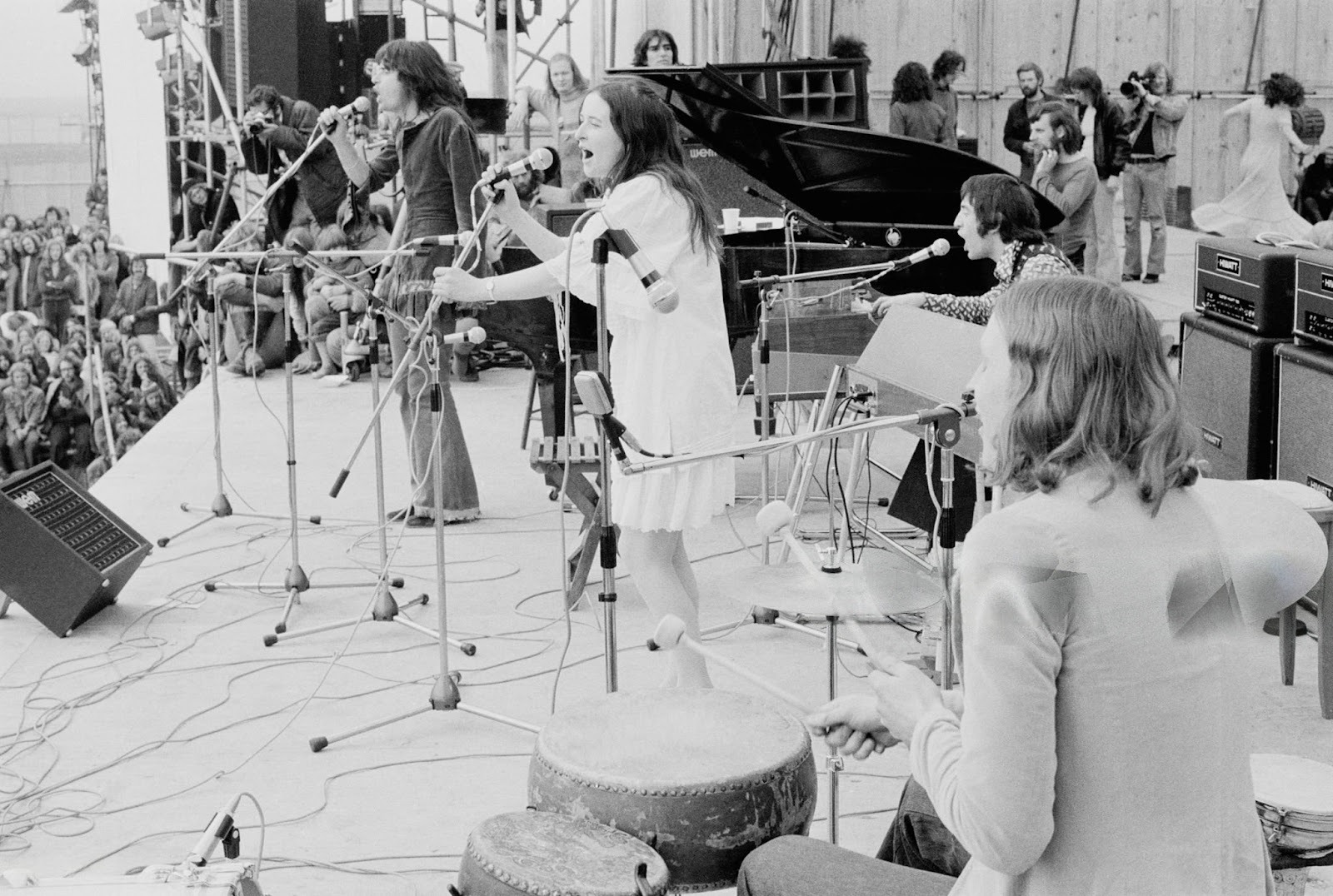
Recognition and Legacy
The significance of The Incredible String Band lies, above all, in their radical reimagining of folk music. They did not merely update the traditional repertoire; they created a new model of folk as an open, global, and spiritually rich art form. Their fusion of Scottish folk traditions with Indian, Afghan, Moroccan, and Bulgarian influences, combined with the use of obscure instruments and atypical vocal styles, established ISB as pioneers of musical synthesis. They made a deep impression on giants like The Beatles, The Rolling Stones, and Led Zeppelin. Notably, Paul McCartney publicly cited their album The 5000 Spirits or the Layers of the Onion as his favourite record of 1967. The fact that the collective shared management and record labels with psychedelic and progressive icons such as Pink Floyd, The Doors, and Love stands as a testament to their undeniable status among the rock elite of the sixties.