


The Royal Lyceum Theatre is one of Edinburgh’s most vibrant theatres. Despite seating only 658 spectators, the venue is highly popular with both locals and tourists alike. Find out more on edinburgh-trend.
In this article, you can get acquainted with the fascinating past of The Royal Lyceum Theatre and, of course, learn about the story of its creation.
How It All Began
The story of any cultural landmark usually begins with the date of its creation.
For The Royal Lyceum Theatre, its history began in 1883. It was then that the building which would later house the famous Edinburgh theatre was constructed.
Interestingly, the architect C. J. Phipps was commissioned to build the structure by James Howard and Fred Wyndham, the famous partners behind the company Howard & Wyndham Ltd.
Preserving Authenticity
As a rule, theatres undergo several large-scale renovations throughout their history, for which the establishment must close. However, in this respect, The Royal Lyceum Theatre is a notable exception. This is because the theatre has only had four minor refurbishments (in 1929, 1977, 1991, and 1996). It is precisely because these updates did not compromise the building’s authenticity that the theatre has managed to preserve its originality and the architect’s initial vision.
The Premiere
Returning to the era when the theatre was newly established, it is worth focusing on the main event: the premiere. The first production shown on the stage of the new theatre on 10th September 1883 was “Much Ado About Nothing”. It was presented by The London Lyceum Theatre company, with the lead roles brilliantly performed by Henry Irving and Ellen Terry.
It is fair to say that this production laid the foundation for the successful future of The Royal Lyceum Theatre and earned it the immense gratitude of its audiences.
Changes
As is well known, theatres are institutions where changes in management and leadership positions occur quite frequently. It may seem at first glance that theatre administration is a simple task, but in reality, it requires knowledge, experience, authority, and, of course, significant finances. It’s often the last of these that proves difficult, especially when subsidies and other financial support from the state cease.
The Royal Lyceum Theatre was not immune to a change of ownership.
In 1965, the Edinburgh Corporation became the new owner of the theatre. However, the reason for this was not financial trouble, but the urgent need to find a home for the newly formed Royal Lyceum Theatre Company.
The Festival Component
Besides showcasing various productions, The Royal Lyceum Theatre also plays a very important role in the city’s cultural life. Since 1947, this theatre has graciously served as a venue for the Edinburgh International Festival.
For this purpose, the theatre building is rented out for three whole weeks every August.
Productions
Of course, the primary mission of any theatre is drama. The Royal Lyceum Theatre has gained fame for its repertoire of incredible dramatic works.
However, its offerings are not limited to drama, and over its history, the theatre has had the honour of presenting significant operas on its stage.
In the latter half of the 19th century, the performances by the Carl Rosa Opera Company caused a sensation. When the era of Scottish Opera arrived in the 1960s and 1970s, the auditorium was filled with delighted audiences. Notably, “Madam Butterfly,” “Manon,” and “Die Meistersinger” were all performed on the stage of The Royal Lyceum Theatre.
Uniqueness
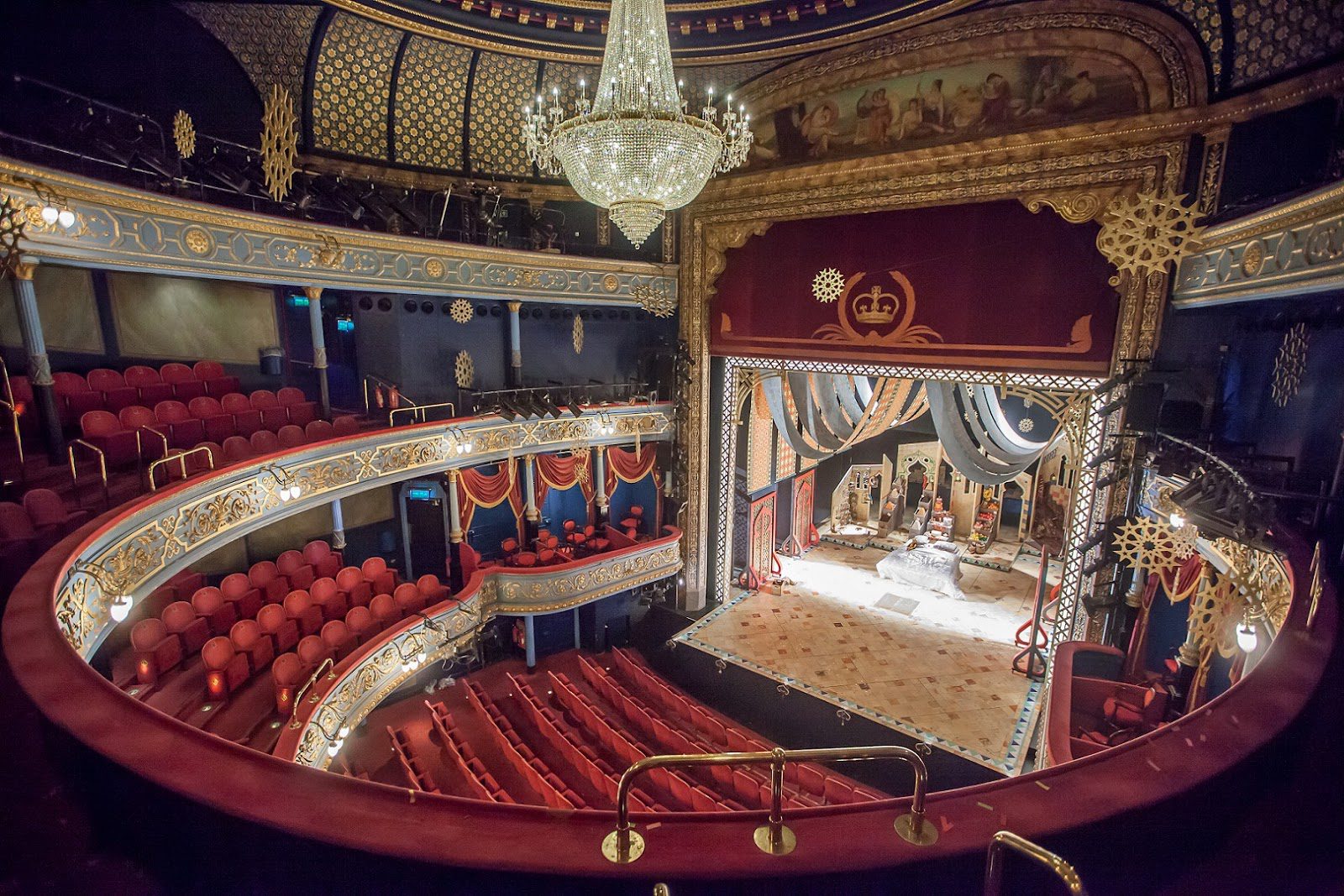
Special attention should be paid to the unique qualities of The Royal Lyceum Theatre. This uniqueness lies not only in its repertoire, delivery of productions, and performance style. In some ways, this theatre was also a “pioneer” on a national scale. What does this mean? It means that The Royal Lyceum Theatre is considered the first theatre in Britain to install an iron safety curtain. It was also the first in Scotland to use electricity for its lighting.
Mysticism
Another detail that connects the stories of many theatres lies in something otherworldly and mysterious.
The fact is, most theatre buildings were created many years ago. And, of course, over their existence, they have “witnessed” the fates of not only the characters in the productions but also of real people.
The Royal Lyceum Theatre is no exception and has its own “otherworldly component”.
It is widely believed that this building has long been a known haunt for ghosts. Eyewitnesses claim to have seen a female shadow resembling Ellen Terry, the actress who starred in the very first production on the theatre’s stage. Locals also say that a dark figure has been repeatedly spotted above the stage, near the lighting rig. Each appearance of these mysterious shadows is reportedly accompanied by a ringing noise.
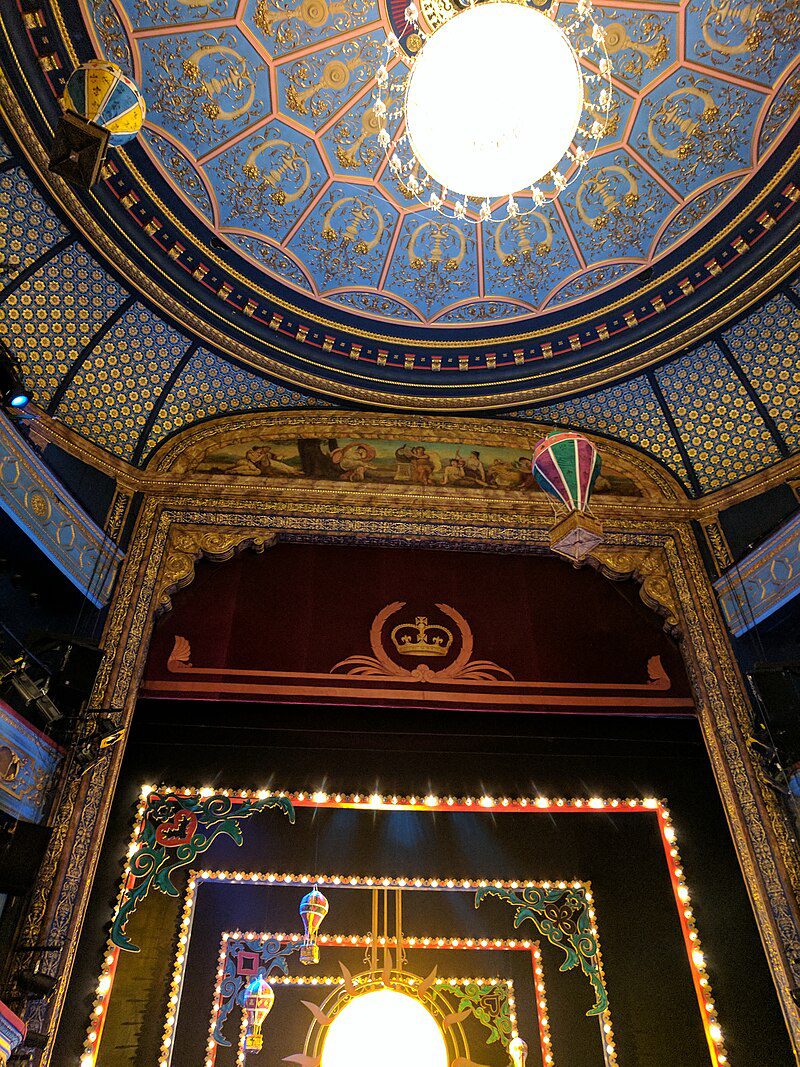
Thus, The Royal Lyceum Theatre can rightly be considered one of the jewels in Edinburgh’s theatrical crown. Throughout its long history, this place has become truly iconic for those who love art, drama, and, of course, all things mysterious. After all, the world of theatre wouldn’t be the same without a little mystery!