


The King’s Theatre is one of Edinburgh’s most famous theatres. The venue has its own unique history, filled with many fascinating facts. Find out more on edinburgh-trend.
Initially, The King’s Theatre gained fame as part of the Howard & Wyndham theatrical empire.
The commission for the theatre’s construction came from the Edinburgh Building Company Ltd, represented by Robert C. Buchanan. The new building was intended to be a direct competitor to the then-successful Royal Lyceum Theatre.
It should be noted that Buchanan was a seasoned hand in the creative sphere, having managed several provincial variety theatres. However, The King’s Theatre was undoubtedly his most ambitious project.
The Beginning of the Journey
The foundation stone for the future theatre was laid on 18th August 1906. However, the construction process proved very difficult due to a lack of funds. This led to significant debt with the contractor, William Stewart Cruikshank, as well as with surveyors, lawyers, and architects.
It was then decided that Buchanan would take the position of Managing Director, while Cruikshank’s son, A. Stewart, would serve as Manager.
Later, there was an attempt to resolve the debt problem by selling the theatre to Howard & Wyndham Ltd. But this plan fell through, and so the Cruikshank family became firmly established in the theatre’s management.
The Long-Awaited Opening
The premiere on the theatre’s stage took place on 8th December 1906, when the audience enjoyed a production of “Cinderella”.
Over time, the theatre reached a new level and began to tour extensively. Its repertoire was significantly enriched with dramas, musicals, revues, operas, and pantomimes.
A New Chapter
It is worth noting that in 1908, the position of Managing Director passed to Stewart Cruikshank.
Despite the theatre’s success, one day its leader realised that his establishment was at a significant disadvantage because it was not part of a larger network. This prompted Stewart to sell his creation in 1928. The new owner was the Howard and Wyndham company, and Ernest Simons took over as director.
As for Cruikshank, it should be noted that he earned a reputation as the country’s leading theatre director. In 1944, following the death of Simons, he became the chairman of the board of directors.
Incredible Success
As Cruikshank held a significant and important role in Edinburgh’s creative sphere, he had the right to participate in the future of The King’s Theatre.
In 1934, he decided to experiment with the upcoming summer theatre season in Edinburgh. Stewart wanted to base it on a show that was popular in Glasgow at the time, “The Half Past Eight”, which had been incredibly successful with audiences there.
However, as it turned out, the Edinburgh public was quite different. On The King’s Theatre stage, the production was a complete flop.
But with the help of Charles and Ilona Ross, as well as Dave Willis, the situation was significantly turned around. A new version of the show was presented on 31st May 1937. Although Cruikshank himself initially had no faith in the venture, the success of the revamped production was incredible.
The King’s Theatre was filled with audiences, and word of the show spread like wildfire.
Renovation
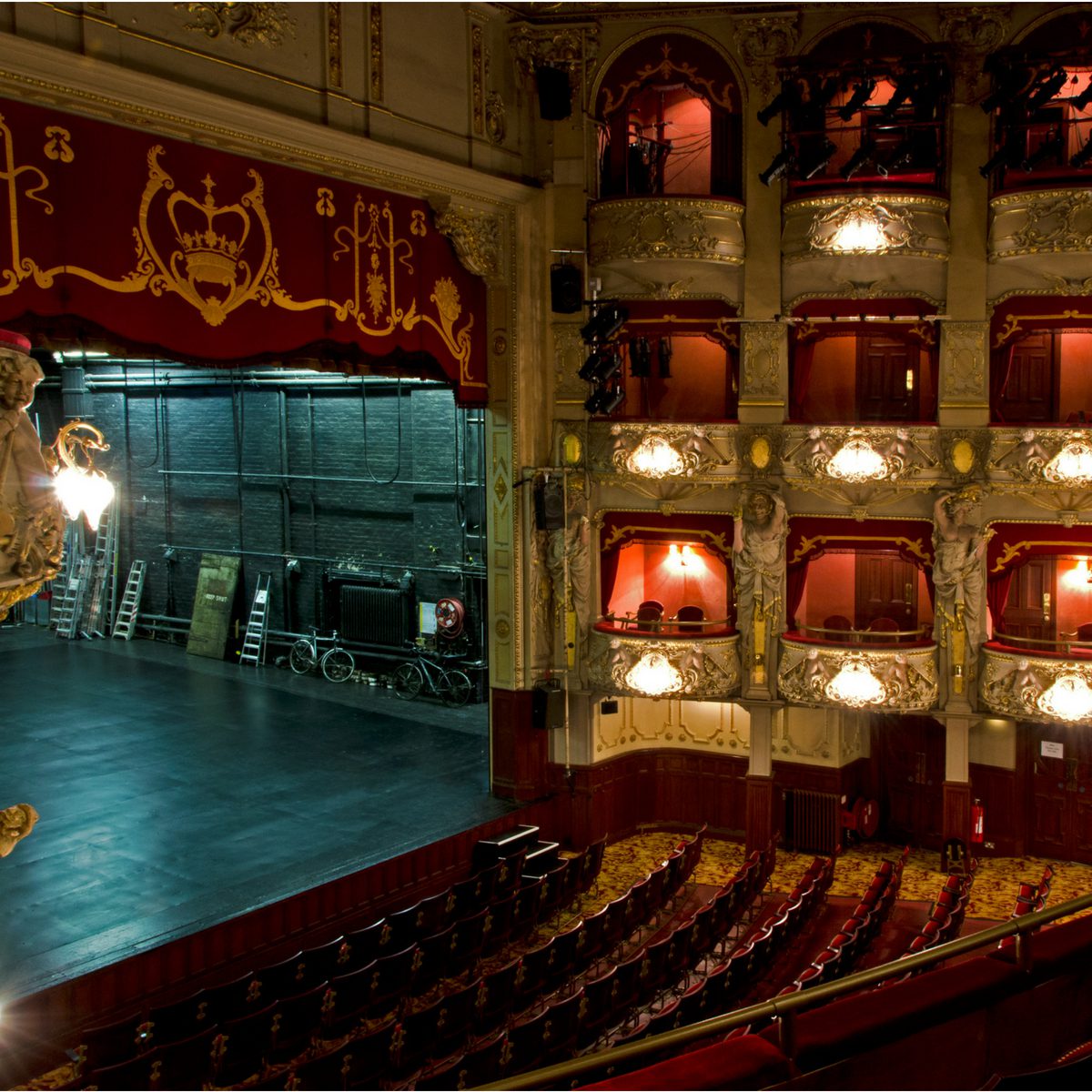
1948 was a very sad year for the theatre, as it was then that Stewart Cruikshank tragically died.
But no matter how sad this event was, The King’s Theatre had to continue its operations.
And a new stage in the theatre’s life was marked by renovations.
In 1950, the canopy was replaced, and later the auditorium was significantly updated. To carry out more substantial changes, the theatre had to close for 10 months, which allowed for the renovation of the entire building.
However, this period was not enough to complete the entire restoration plan.
Therefore, when The King’s Theatre partially reopened in 1951, the dress circle remained closed.
It was only on 14th December 1951 that the renovated theatre officially opened its doors to the audience. That evening, the public was treated to the pantomime “Puss in Boots”.
Radical Changes
The late 1960s were marked by the rapidly growing popularity of television. Of course, this had a negative impact on the theatre’s fortunes, as people began to prefer television series, shows, and spending their evenings at home on the sofa.
Large theatres stopped receiving subsidies, and their affairs were in poor shape. The King’s Theatre was no exception, so in 1969, Howard & Wyndham decided to sell it. As a result, the new owner of the venue became Edinburgh City Council.
It should be noted that the sale of The King’s Theatre was the right move, because from that moment on, the theatre began to gradually come back to life.
In 1970, it was officially recognised as a listed building. In 1985, the city council allocated more than one million pounds for the theatre’s reconstruction. This allowed for the restoration of the building’s unique wood, marble, and glass elements, the widening of aisles in the auditorium, and the updating of the seating.
Therefore, it can be safely said that the difficult times for The King’s Theatre ultimately led to very positive changes.
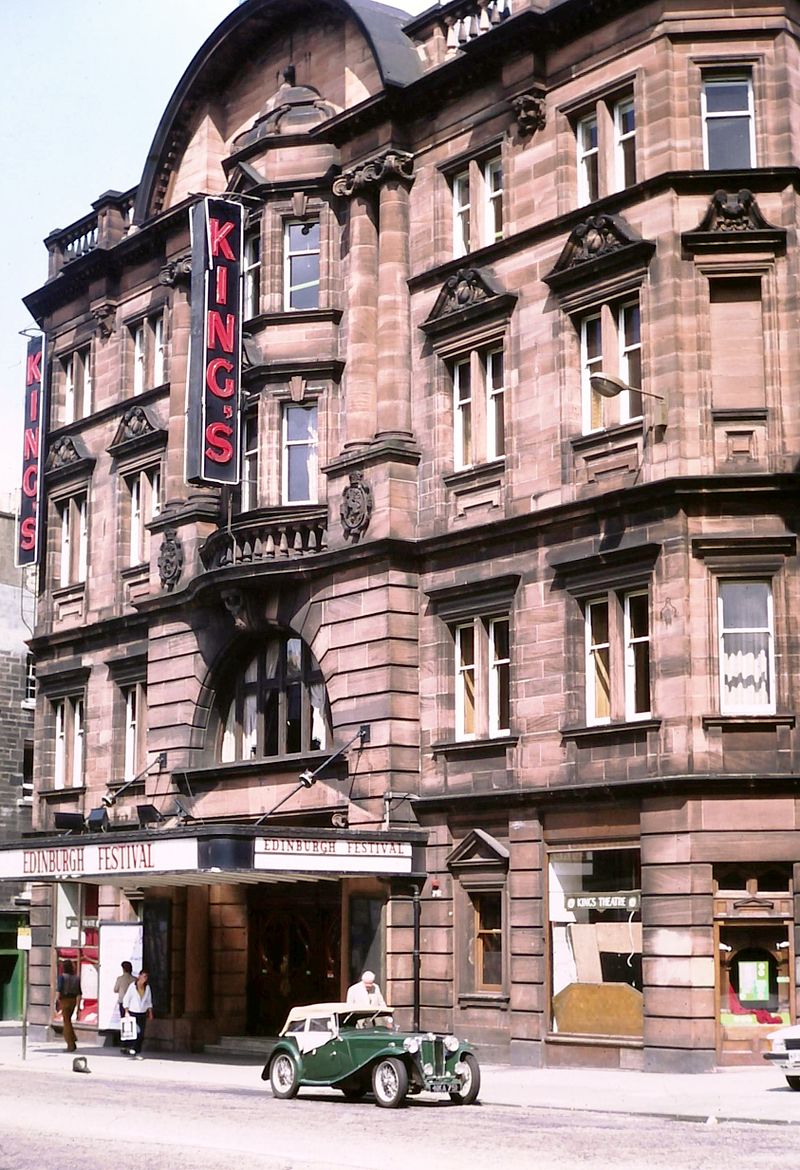
Since then, the theatre has hosted vibrant events, among which the pantomimes rightly stand out.
Later, the management of The King’s Theatre was transferred to Capital Theatres. This organisation continues to lead the theatre on a path of constant development and improvement, which is reflected in both its repertoire and its appearance.